
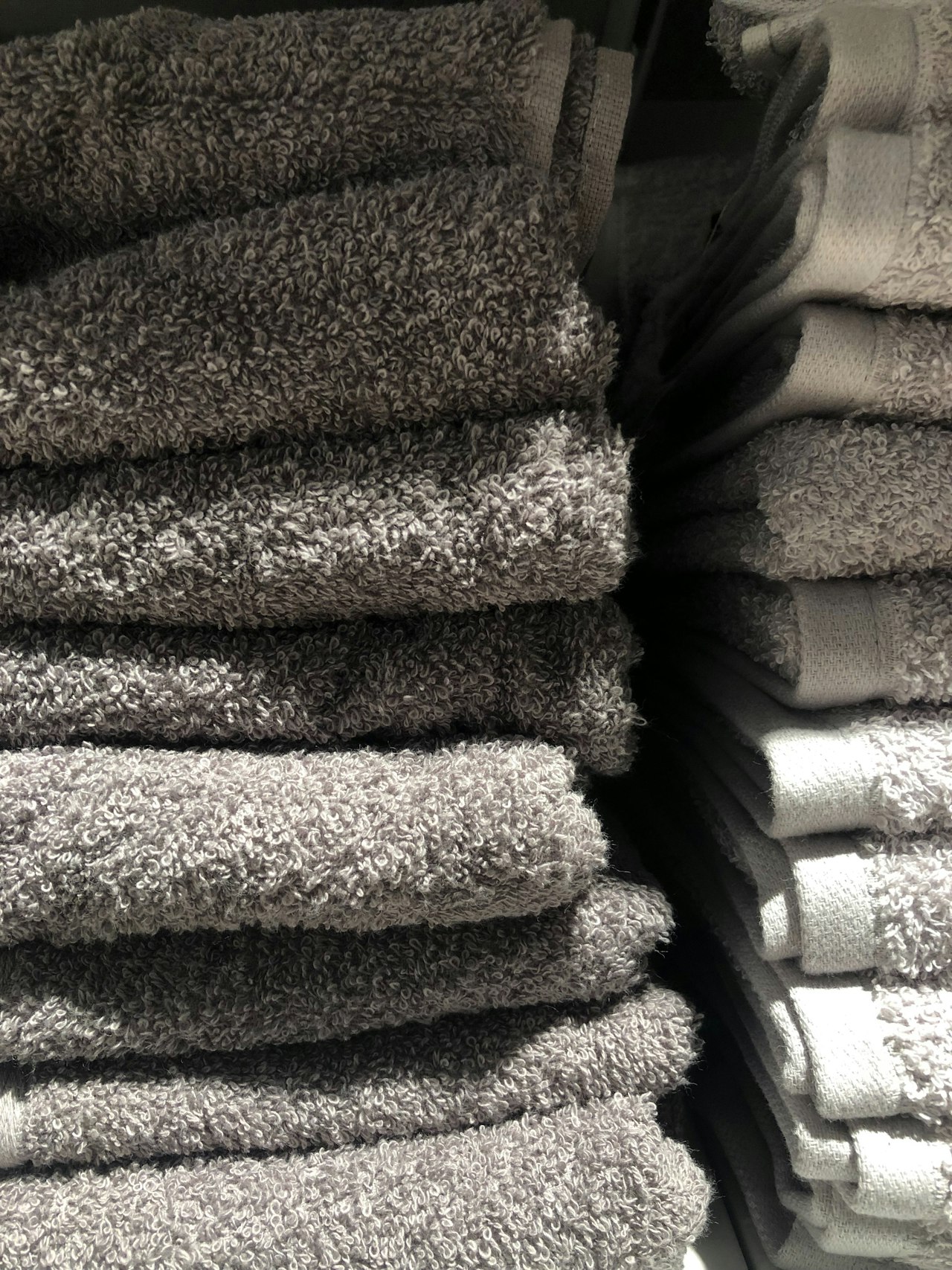
There is a familiar disappointment that comes with brand-new towels. They feel lovely in the packaging, but the first time you step out of the shower they seem to push water around rather than soak it up. Some shed little fluffs of lint everywhere. Others carry a faint chemical smell.
None of this means the towels are poor quality. In most cases, they simply have not been washed yet. A proper first wash is one of the easiest ways to get better performance from new towels, and it sets them up to last longer too.
Why New Towels Need Washing
Towels leave the mill with a few things on them that are not meant to stay. Many are treated with a softening finish so they feel appealing in the store. That finish coats the fibres and blocks water, which is why new towels can feel water-resistant at first. There may also be loose fibres from the weaving process, residue from dyeing, and dust picked up in storage and shipping.
A first wash strips away the finish, rinses out residue and lets the cotton fibres relax and open up. After one or two washes, a good towel absorbs noticeably better.
Step 1: Wash Separately
Wash new towels on their own for the first two or three cycles. Coloured towels can release some dye early on, and new towels shed loose fibres that will cling to other laundry. Washing them alone protects your clothes and lets the towels move freely in the drum.
Do not overload the machine. Towels need room to agitate so water and detergent reach every loop.
Step 2: Use Warm Water and Less Detergent
Warm water is usually enough for the first wash. Use about half your normal dose of detergent. Too much detergent leaves its own residue behind, which defeats the purpose of removing the factory finish.
Choose a plain detergent without added softener. Many all-in-one products include softening agents that coat the fibres again.
Step 3: Add White Vinegar
A cup of white vinegar in the rinse cycle helps dissolve the softening finish and any detergent residue. It also helps set colour in dyed towels. The smell rinses out completely and does not linger once the towels are dry.
Some people run a second wash with half a cup of baking soda and a small amount of detergent. This is optional, but it can help with towels that still feel slick after the first cycle.
Step 4: Skip Fabric Softener
This is the most important rule, both for the first wash and every wash after. Fabric softener coats cotton with a waxy layer. It makes towels feel silky to the touch but steadily reduces absorbency. Over months, the build-up leaves towels stiff and less effective.
If you want softness, the vinegar rinse and a good shake before drying will do more for the towel than any softener.
Step 5: Dry Properly
Shake each towel out before drying to lift the loops. Tumble dry on medium heat, or line dry outdoors if the weather allows. Very high heat can weaken cotton fibres over time, so it is better to dry a little longer at a moderate setting.
Make sure towels are completely dry before folding. Even slight dampness in a stack can lead to a musty smell.
Expect Some Lint at First
A small amount of lint in the first few washes is normal for any new terry towel. It should reduce noticeably after two or three cycles. If a towel keeps shedding heavily after several washes, that usually points to short, loose fibres in the yarn, which is a quality issue rather than a washing problem.
Towels made from long-staple or combed cotton shed far less from the start. Combing removes the shortest fibres before spinning, which leaves a cleaner, stronger yarn. When you compare combed cotton bath towels with cheaper options, this is one of the clearest differences you will notice in the first month.
How the First Wash Pays Off Long Term
Washing new towels correctly does more than improve absorbency in the first week. It starts the towel off without build-up, which keeps fibres flexible and helps the towel stay soft for years. Towels that begin life coated in softener and over-dosed with detergent tend to stiffen and wear out sooner.
Quality makes the process easier too. A well-made towel around 600 GSM, woven from long-staple or combed cotton and independently tested to a standard such as OEKO-TEX, usually needs just one or two washes to reach its best. Everlayer, a Canadian-founded brand, has its 600 GSM combed cotton towels woven in Portugal and tested to OEKO-TEX, and sells them online and on Amazon. To see how this compares with other premium makers, this look at European-woven towels sets out craftsmanship against price.
The Bottom Line
Wash new towels separately, use warm water and half the detergent, add white vinegar to the rinse, skip softener and dry them fully. One or two careful washes turn a slick, shedding new towel into one that absorbs well and stays soft for years.