

Incorporating mindful living habits can provide quick stress relief and improve overall well-being. Start with mindful breathing—take deep breaths in for four counts, holding briefly, then exhaling. This simple act calms your nervous system. Progressive muscle relaxation also helps; tense and relax each muscle group from toes to head, releasing physical tension. Taking nature walks is refreshing as you engage your senses with the surroundings, while daily meditation can enhance focus and emotional resilience. Journaling thoughts offers clarity on stressors, and practicing mindful eating brings awareness to what you consume. Finally, jotting down three things you're grateful for daily shifts your perspective towards positivity.
1. Mindful Breathing for Instant Calm
 Credits: mondaycampaigns.org
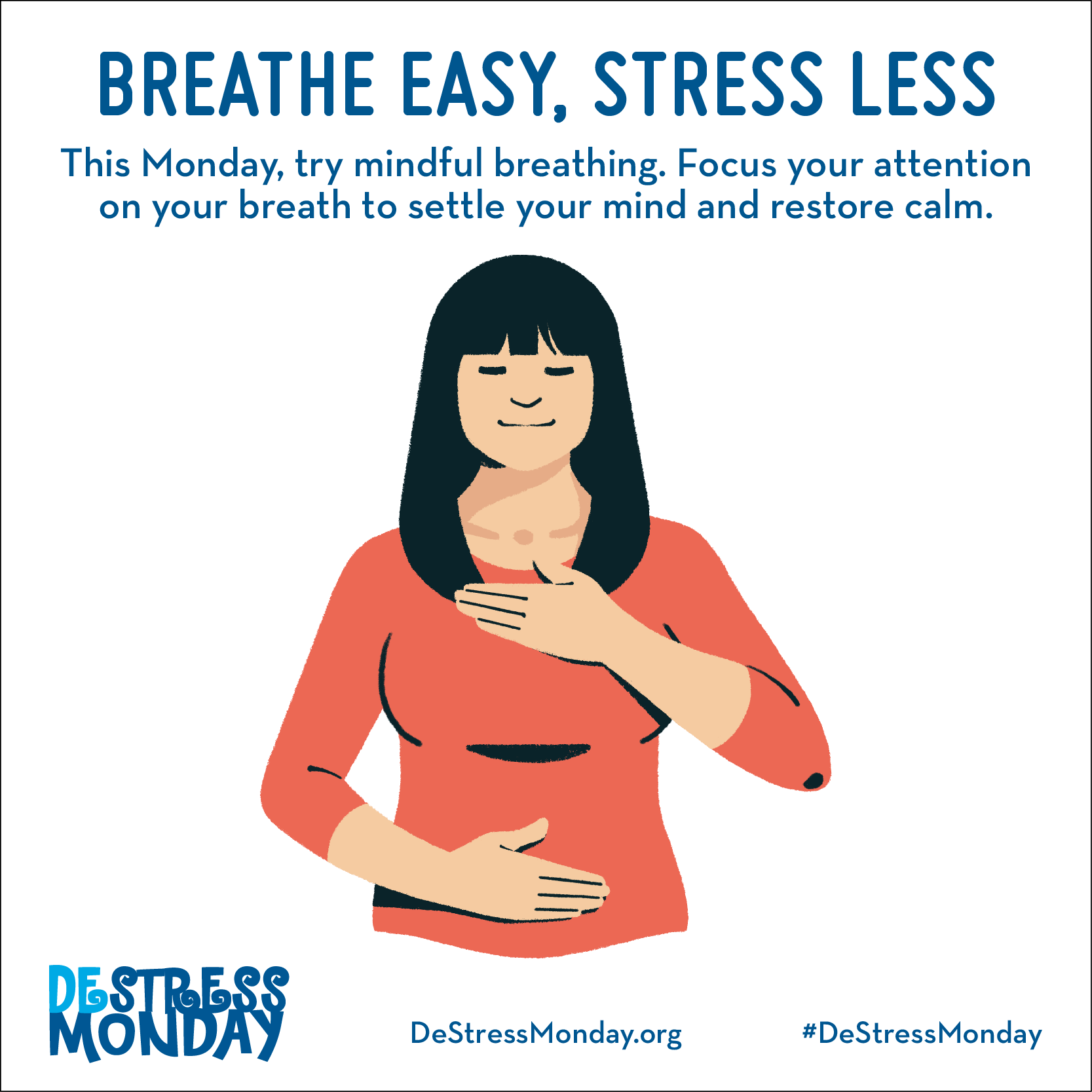
Mindful breathing is a powerful technique that can help you find immediate calm. To practice, take a moment to focus on your breath. Inhale deeply for four counts, hold for four counts, and then exhale for four counts. Repeat this cycle for a few minutes. This simple practice calms your nervous system, reduces anxiety, and brings your attention back to the present moment.
In addition to breathing, you can enhance relaxation through progressive muscle relaxation. Start by tensing your toes for a few seconds, then release. Gradually work your way up through your body, tensing and relaxing each muscle group. This method helps to release physical tension and promotes a deep sense of relaxation.
If you prefer to be outdoors, consider going on nature walks. Spending time in a natural setting while engaging your senses can significantly reduce stress. Notice the vibrant colors of the leaves, the sound of birds chirping, and the smell of fresh grass. Nature has a unique calming effect that can help ground you and shift your mood.
Incorporating mindful breathing and these additional techniques into your daily routine can be a game-changer for managing stress.
2. Progressive Muscle Relaxation Techniques
Progressive muscle relaxation (PMR) is a simple yet effective technique for reducing stress and promoting relaxation. This practice involves systematically tensing and then relaxing each muscle group in your body, starting from your toes and working your way up to your head. As you focus on each muscle group, the contrast between tension and relaxation helps to release physical stress stored in your body.
To get started with PMR, find a quiet space where you can sit or lie down comfortably. Begin by taking a few deep breaths, inhaling for four counts, holding for four, and exhaling for four. Once you feel settled, start at your toes. Tense the muscles in your feet and hold the tension for about five seconds, then release and notice the sensation of relaxation. Move up to your calves, thighs, abdomen, and so on, all the way to your head, ensuring you pause to breathe deeply after each muscle group.
Incorporating PMR into your routine can be particularly helpful during high-stress moments. For example, if you find yourself feeling overwhelmed at work, take a short break to practice PMR in a private area. This technique not only helps in alleviating immediate stress but also trains your body to recognize tension and release it more effectively over time.
| Step | Description | Benefits |
|---|---|---|
| 1. Start from Toe | Tense the muscles in your toes for five seconds, then relax. | Releases physical tension in the lower body. |
| 2. Move to Legs | Tense the calf muscles for five seconds, then relax. | Promotes relaxation in the legs. |
| 3. Tense Thighs | Tense the thigh muscles for five seconds, then relax. | Helps ease tension in the thighs. |
| 4. Engage Abdomen | Tense abdominal muscles for five seconds, then relax. | Encourages a sense of physical release. |
| 5. Tighten Arms | Tense your arms for five seconds, then relax. | Reduces tension in the upper body. |
| 6. Tense Shoulders | Raise your shoulders toward your ears for five seconds, then relax. | Releases shoulder tension and promotes calm. |
| 7. Conclude with Face | Tense facial muscles for five seconds, then relax. | Completes the full-body relaxation practice. |
3. Rejuvenating Nature Walks
Taking a nature walk can be one of the simplest yet most effective ways to relieve stress. When you step outside and immerse yourself in a natural setting, your senses awaken. Listen to the rustling leaves, notice the vibrant colors of flowers, and breathe in the fresh air. This connection with nature has a calming effect that can help lower stress levels.
To enhance the experience, practice mindful breathing during your walk. Inhale deeply for four counts, hold for four, and exhale for four. This technique calms your nervous system and helps clear your mind. Additionally, consider incorporating progressive muscle relaxation. As you walk, focus on tensing and then relaxing different muscle groups. Start from your toes and work your way up. This can help release physical tension built up in your body.
A nature walk doesn’t have to be long or strenuous. Even a short stroll in a nearby park can provide the rejuvenation you need. Engage fully with your surroundings, and you may find that your worries start to fade, replaced by a sense of peace and clarity.
4. Daily Meditation Practices
 Credits: verywellhealth.com
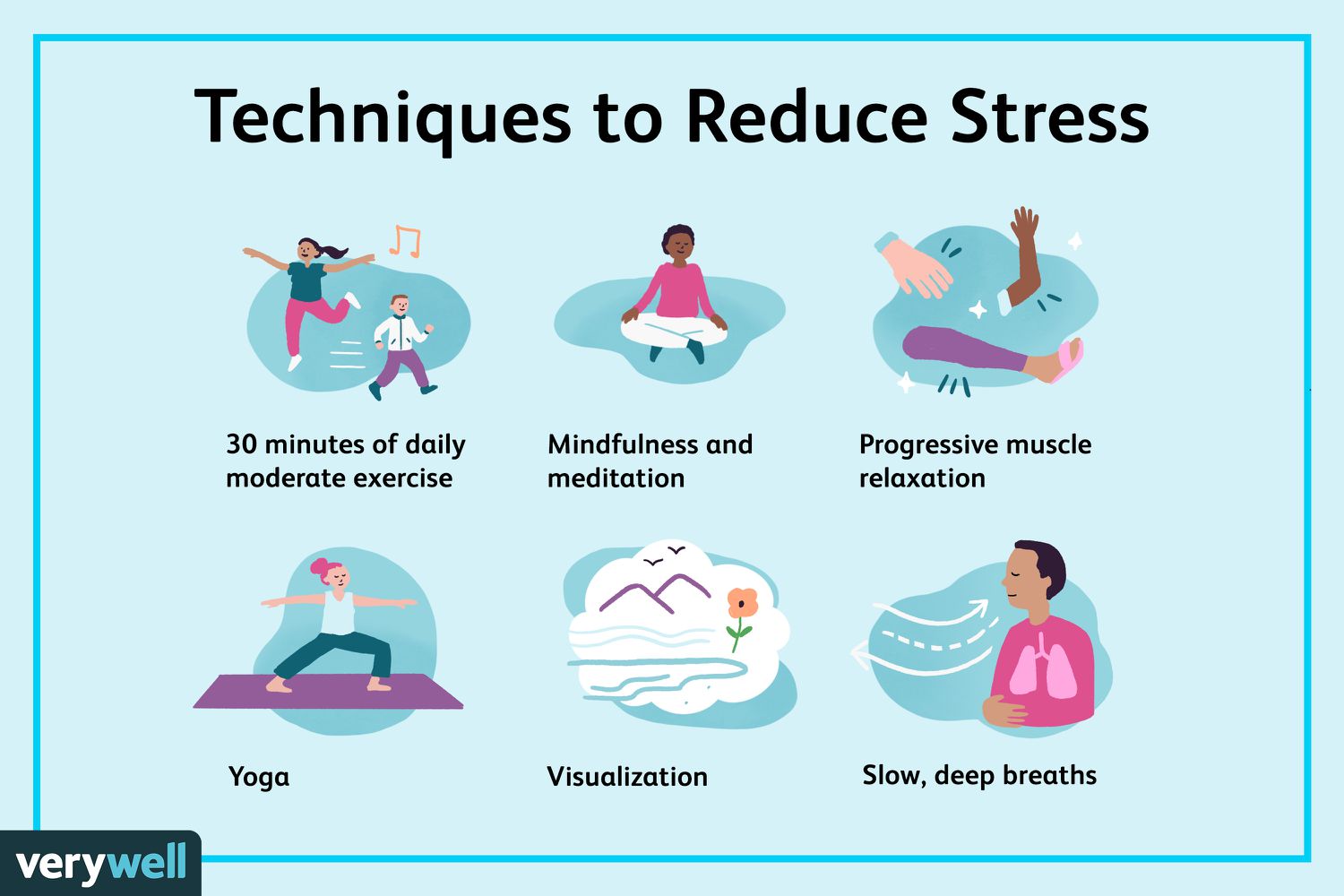
Daily meditation practices can be a powerful tool for reducing stress and enhancing well-being. One effective method is mindful breathing, where you focus on your breath for a few minutes. Inhale deeply for four counts, hold for four, and exhale for four. This simple technique calms your nervous system and alleviates anxiety.
Progressive muscle relaxation is another beneficial practice. By tensing and then relaxing each muscle group in your body—starting from your toes and moving up to your head—you can release physical tension and promote relaxation.
Incorporating nature walks into your routine can also serve as a form of meditation. Spending time outdoors allows you to engage your senses, noticing the sounds, sights, and smells around you. Nature has a soothing effect and significantly reduces stress.
Setting aside just a few minutes each day for meditation can enhance emotional resilience. Using meditation apps or guided sessions can help maintain your focus, making it easier to establish a consistent practice. Additionally, journaling your thoughts and feelings after meditation can provide clarity and a deeper understanding of your stressors. Mindful eating and gratitude practices can further enrich your meditation experience by encouraging a positive mindset and appreciation for life's simple joys.
5. Benefits of Journaling for Stress Relief
Journaling is a powerful tool for managing stress. By writing down your thoughts and feelings, you create a space to process your emotions. This practice helps you to clarify what’s troubling you, allowing for greater insight and understanding. For instance, if you’re feeling overwhelmed by a particular situation, journaling can help you break it down into smaller, more manageable parts.
Additionally, journaling allows you to track your stress triggers over time. By recognizing patterns, you can develop strategies to cope with similar challenges in the future. It also serves as an emotional release, helping to alleviate feelings of anxiety. When you put pen to paper, you may find that your worries lose some of their power. Creating a gratitude section in your journal can further enhance its benefits, reminding you of positive aspects in your life, which can shift your focus away from stressors.
- Helps clarify thoughts and feelings
- Reduces anxiety and depression
- Improves emotional intelligence
- Promotes self-reflection and personal growth
- Enhances problem-solving skills
- Encourages mindfulness and presence
- Boosts creativity and self-expression
6. Embracing Mindful Eating
Mindful eating is all about being present with your food. Instead of rushing through meals or eating while distracted, take the time to truly savor each bite. Focus on the taste, texture, and aroma of your food. For example, when eating a piece of fruit, notice its sweetness, the juiciness, and even the color of the skin. This practice encourages appreciation for what you’re consuming and can help reduce stress related to unhealthy eating habits. By being fully engaged during meals, you can develop a healthier relationship with food, which may lead to better choices and less stress around eating.
7. Simple Gratitude Practices
 Credits: lindsaywalden.com
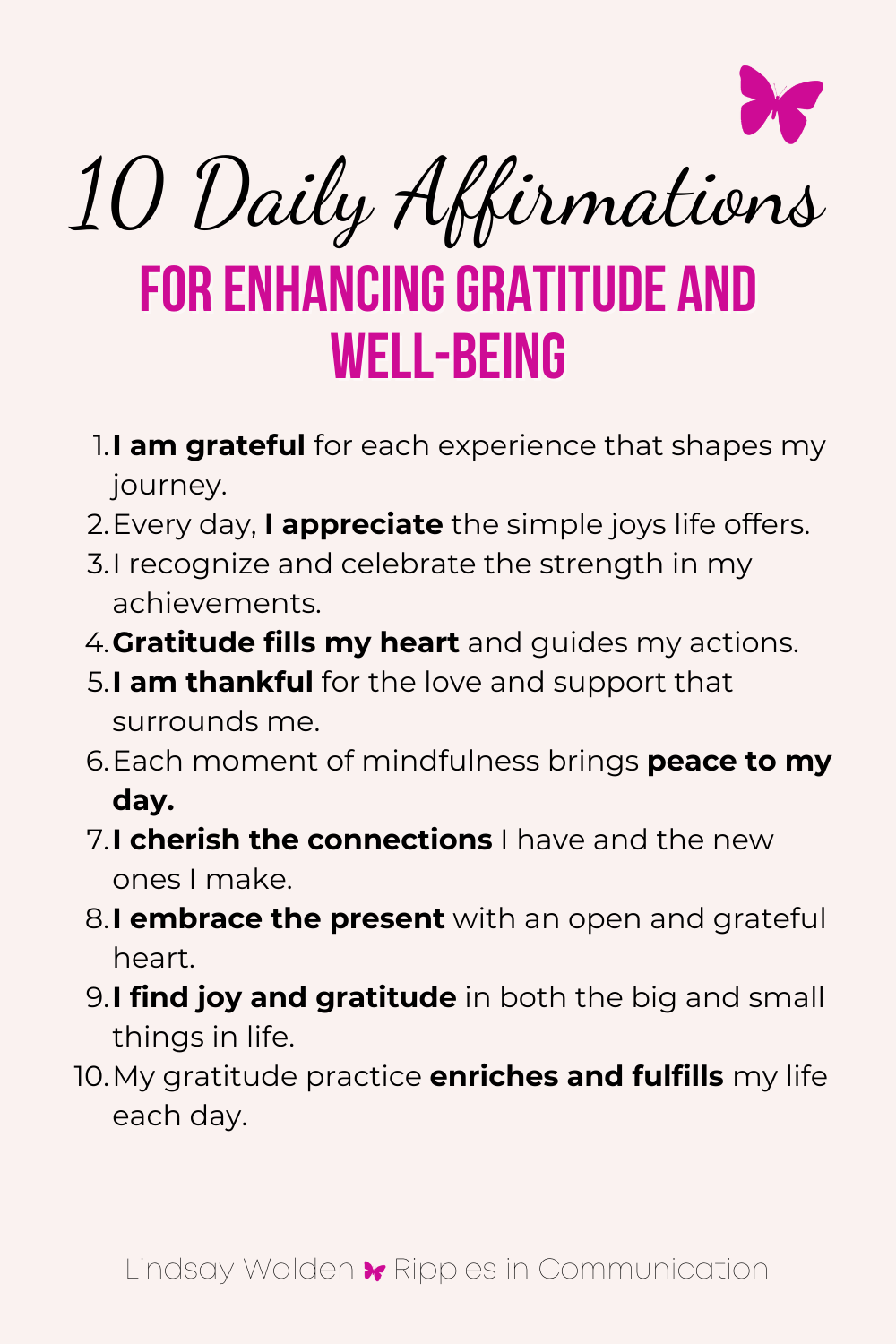
Practicing gratitude can be a powerful way to shift your mindset and reduce stress. Each day, take a moment to write down three things you are grateful for. They can be as simple as a warm cup of coffee in the morning, a smile from a stranger, or the beauty of a sunset. This practice helps you focus on the positive aspects of your life, fostering a sense of appreciation. Over time, you'll notice that your outlook on life improves, making stressful situations easier to handle. Additionally, consider sharing your gratitude with others by expressing thanks to friends or family, which can deepen your relationships and promote a positive environment.
Frequently Asked Questions
1. What are some quick ways to practice mindful living for stress relief?
You can try deep breathing, taking short breaks throughout the day, or simply focusing on your senses to help you feel more present and relaxed.
2. How does mindfulness help reduce stress immediately?
Mindfulness helps you focus on the present moment, which can calm your mind and reduce feelings of anxiety or overwhelm.
3. Can I do mindful practices anywhere?
Yes, mindful practices can be done anywhere, whether you're at home, at work, or outside. Just take a moment to breathe and be aware of your surroundings.
4. Are there specific habits I can start with to be more mindful?
Absolutely! Start with simple habits like mindful breathing, gratitude journaling, or taking a few moments each day to reflect on what you're thankful for.
5. How long should I practice these mindful living habits for them to be effective?
Even a few minutes of mindful practice each day can be effective. The key is consistency—try to make it a regular part of your routine.
TL;DR Explore 7 mindful living habits for immediate stress relief: 1) Mindful Breathing to calm the nervous system. 2) Progressive Muscle Relaxation to release physical tension. 3) Nature Walks for a calming environment. 4) Daily Meditation to improve emotional resilience. 5) Journaling to clear your mind. 6) Mindful Eating to savor your food. 7) Simple Gratitude Practices to shift your perspective. Implement these habits to alleviate stress and promote well-being.


